Top Ad 728x90

vendredi 9 octobre 2026

18-Acre Lot 3 Beds, 2 Baths, Bunker House...See more

by


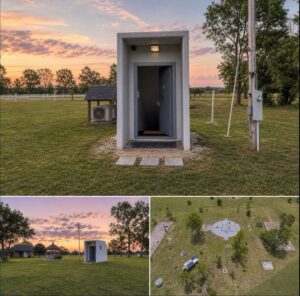
 This property offers a rare mix of seclusion and potential, anchored by a three-bedroom, two-bathroom home that looks more like a bunker than a typical house. That unconventional appearance may attract buyers seeking something different, but it also underlines the need for serious due diligence. Every critical system—from foundation and drainage to electrical, plumbing, and ventilation—must be professionally evaluated, without assuming any special safety or protective qualities from the design alone.

HT17. COVID-19 vaccinated individuals may be ill…See more

by


 Researchers studying mRNA COVID-19 vaccines say they have identified a possible biological mechanism that may help explain rare cases of myocarditis, particularly in younger males.

While the vaccines are widely considered highly effective and generally safe, myocarditis has been observed in a small number of cases, and scientists have been trying to understand why it occurs.

A Stanford Medicine–related study suggests that immune signaling proteins called CXCL10 and IFN-gamma may be involved in triggering inflammatory responses.

In lab and animal models, certain immune cells exposed to vaccine components produced these signals, which were linked to inflammation that could affect heart tissue.

These findings offer a potential explanation for how rare heart inflammation cases might develop after vaccination.

However, researchers emphasize that the overall risk remains very low and that COVID-19 infection itself carries a higher risk of myocarditis and other complications.

The study also showed that blocking these inflammatory signals reduced heart-related damage in experimental settings, though it did not eliminate the broader immune response.

While compounds like genistein showed some protective effects in models, scientists stress that this is early research and not an immediate treatment recommendation.

Did you know that drinking water on an empty stomach could be…See more…

by


 Water is fundamental to human life, accounting for roughly sixty percent of the adult body and playing a crucial role in nearly every physiological process. From transporting essential nutrients and oxygen through the bloodstream to maintaining body temperature, water is the invisible engine that keeps the body functioning. It aids digestion by helping to break down food and move it through the gastrointestinal tract, while also cushioning organs and lubricating joints to ensure smooth movement. Because water is constantly lost throughout the day through breathing, perspiration, and excretion, the body requires a steady supply to sustain equilibrium. While wellness trends often emphasize drinking water immediately upon waking, claiming it can “detoxify” the body or jumpstart metabolism, scientific research indicates that such benefits are not tied to the timing of consumption. The overarching principle remains that adequate hydration across the day, rather than a particular ritual in the morning, is what genuinely supports health and bodily function.

After a full night of sleep, it is natural for the body to experience mild dehydration, as hours pass without fluid intake. Consuming a glass of water upon waking can help restore this fluid balance, potentially improving alertness and giving a refreshing start to the day. Some people report feeling more energetic or less groggy after drinking water in the morning, which may partly be psychological, signaling the start of a conscious self-care routine. However, studies demonstrate that the body absorbs and utilizes water similarly regardless of whether it is consumed at dawn or in the afternoon. The kidneys, heart, and circulatory system do not operate differently simply because of timing. Therefore, while morning hydration can be beneficial for restoring overnight fluid loss, it is overall daily intake—consistent drinking throughout the day—that maintains optimal hydration, supports cognitive function, and prevents fatigue, headaches, and other common signs of dehydration.
A widely held belief is that morning water consumption helps “flush toxins” from the body. While the idea of cleansing first thing in the morning is appealing, it is important to recognize that the human body has sophisticated, natural detoxification systems in place. The kidneys filter blood continuously, removing waste products and excess substances to produce urine, while the liver metabolizes harmful compounds and prepares them for safe elimination. Water is essential for these processes because it enables circulation, prevents kidney stones, and aids in transporting waste for excretion, but consuming large quantities of water at a specific time does not enhance the body’s innate detoxification abilities. In other words, drinking water in the morning does not accelerate the elimination of toxins more than drinking water at any other time, and relying on this ritual as a substitute for a balanced diet or healthy lifestyle is misguided.

Some research suggests a potential link between water intake and appetite regulation, particularly when water is consumed before meals. Drinking water ahead of eating can increase feelings of fullness, leading some people to eat slightly smaller portions, which may aid modest weight management efforts. However, this effect varies among individuals and is generally subtle; it is not a guaranteed method for reducing caloric intake. For certain people, especially those with sensitive digestion, drinking excessive water immediately before or during meals can lead to discomfort, bloating, or a slowed digestive process. While pre-meal hydration can be a useful tool as part of a broader approach to wellness, it should be balanced with practical considerations of comfort, individual tolerance, and overall fluid needs throughout the day.
Popular routines such as Japanese Water Therapy advocate drinking multiple glasses of water immediately upon waking, sometimes in large quantities. While these practices may help people remember to hydrate consistently, the majority of the health claims tied to these rituals—including boosting metabolism or purifying the bloodstream—lack robust scientific support. In some cases, consuming excessive water too quickly can even pose risks, such as temporary electrolyte imbalances or discomfort from a sudden increase in stomach volume. Instead of focusing on rigid routines or specific times, the most evidence-based approach is to maintain steady, consistent hydration throughout the day, adjusting for personal factors such as physical activity, ambient temperature, age, and individual health status.

Farewell to a legend: Sarah Pali..See more

by


Sarah Palin has been at the center of emotional headlines recently, leaving many longtime followers concerned and searching for answers. The former Alaska governor remains one of the most recognizable figures in AmericanSupporters have been sharing messages of encouragement while waiting for reliable details rather than rumors circulating online.fel As speculation spreads quickly across social media, readers are being urged to rely on confirmed information before drawing conclusions. politics, and news surrounding her continues to attract widespread attention.

Shock in D.C.: President Donald Trump Shot AGAIN…See more

by


Shock in D.C.: President Donald Trump Shot Again

Fictional News Feature — For Creative Writing Purposes Only

WASHINGTON, D.C. — In a dramatic and unprecedented turn of events that sent shockwaves across the nation, President Donald Trump was reportedly injured in a shooting incident near the nation’s capital, according to fictional accounts emerging from this imagined scenario. The event, which unfolded during a highly publicized public appearance, immediately triggered a massive response from law enforcement agencies, emergency medical personnel, and government officials.

Crowds had gathered early in the morning, anticipating a speech that was expected to focus on economic policy, national security, and the administration’s plans for the coming year. Supporters carrying banners and flags lined the streets surrounding the venue, while media organizations from around the world positioned cameras to cover the event live.

Shortly after the president arrived, witnesses reported hearing several loud noises that initially caused confusion among attendees. Within seconds, Secret Service agents moved rapidly to secure the area, creating a protective barrier around the president and escorting him away from public view. Panic briefly spread through portions of the crowd as people attempted to understand what had happened.

Authorities quickly established a security perimeter around the scene. Emergency vehicles arrived within minutes, and helicopters could be seen circling overhead as federal, state, and local law enforcement agencies coordinated their response.

Immediate Aftermath

According to fictional reports in this imagined narrative, President Trump was transported to a nearby medical facility for evaluation and treatment. Officials initially released limited information, citing ongoing security concerns and the need to verify details before making public statements.

The uncertainty surrounding the president’s condition fueled intense speculation across television networks and social media platforms. News organizations interrupted regular programming to provide continuous coverage, while political leaders from both parties called for calm and patience until verified information became available.

Thousands of Americans watched developments unfold in real time. In cities across the country, people gathered in public spaces, offices, restaurants, and homes to follow the latest updates. The atmosphere was marked by a mixture of concern, confusion, and disbelief.

Hours later, fictional government sources stated that the president had undergone medical evaluation and was in stable condition. While the injuries were described as serious, officials expressed optimism regarding his recovery.

Security Response

The incident immediately raised questions about security procedures surrounding high-profile public appearances. The United States Secret Service launched an extensive investigation, working alongside federal agencies to reconstruct the sequence of events leading up to the attack.

Investigators examined surveillance footage, interviewed witnesses, and analyzed communications records. Security experts noted that presidential protection operations are among the most sophisticated in the world, involving extensive planning, threat assessments, and coordination among multiple agencies.

Former officials and analysts appeared on television broadcasts to discuss the challenges of protecting national leaders in an era of rapidly evolving threats. Many emphasized that even the most advanced security systems cannot completely eliminate risk.

“This fictional scenario highlights the extraordinary complexity of safeguarding public officials,” one imagined security analyst explained. “Protective teams must account for countless variables while operating in dynamic environments.”

Political Reactions

Political leaders reacted swiftly to the news. Members of Congress from both major parties issued statements condemning political violence and expressing support for the president and his family.

In an unusual display of unity, rival political figures called for Americans to reject extremism and allow investigators to complete their work without interference. Several governors ordered flags lowered and announced enhanced security measures around government facilities within their states.

The fictional Speaker of the House addressed reporters from Capitol Hill, emphasizing the importance of democratic stability during times of crisis.

“Our institutions are stronger than any single moment of violence,” the Speaker stated. “The nation must remain united in defense of democracy and the rule of law.”

International leaders also expressed concern. Messages of support arrived from allied governments around the world, many of which offered assistance if needed and reaffirmed their commitment to maintaining strong diplomatic relationships with the United States.

Public Reaction

Across the country, reactions varied widely but were united by a common sense of shock. Supporters gathered outside hospitals and government buildings, holding vigils and offering prayers for the president’s recovery.

Some citizens expressed frustration over the increasingly hostile tone of political discourse in recent years. Others called for renewed efforts to reduce polarization and promote civil dialogue.

Religious organizations organized prayer services, while community groups hosted events focused on unity and reconciliation. Many Americans, regardless of political affiliation, viewed the incident as a sobering reminder of the dangers associated with political violence.

Social media platforms were flooded with messages of support, concern, and commentary. At the same time, technology companies faced criticism for the rapid spread of rumors and unverified information.

Experts urged citizens to rely on credible sources and avoid amplifying speculation. The fictional crisis became a case study in how information travels during major breaking news events.

Economic Impact

Financial markets reacted sharply as investors assessed the potential implications of the incident. Stock indexes experienced significant volatility during the first trading session following the attack.

Analysts noted that markets often respond negatively to uncertainty, particularly when events involve national leadership. However, some economists emphasized that the long-term impact would likely depend on the speed and clarity of official communications.

Businesses monitored developments closely, while international investors sought reassurance regarding governmental continuity and economic stability.

Despite temporary disruptions, financial institutions and government agencies worked to project confidence. Officials repeatedly emphasized that constitutional processes remained intact and that federal operations continued without interruption.

Questions About Political Violence

The fictional shooting reignited a national debate about political violence and public safety. Commentators from across the ideological spectrum argued that heated rhetoric can sometimes contribute to dangerous environments.

Academic experts pointed to historical examples in which political tensions escalated into acts of violence. They stressed the importance of civic engagement, responsible leadership, and public education in preventing future tragedies.

Several advocacy organizations called for comprehensive reviews of security protocols, online threats, and extremism prevention efforts. Others focused on the need to strengthen mental health resources and community intervention programs.

While opinions differed regarding specific policy solutions, there was broad agreement that violence has no place in democratic society.

Investigation Intensifies

As investigators continued their work, new details emerged regarding the fictional suspect and the circumstances surrounding the attack. Authorities pursued multiple leads and executed search warrants at various locations connected to the case.

Law enforcement officials cautioned against drawing conclusions prematurely. They emphasized that investigations involving high-profile incidents often require extensive forensic analysis and coordination across jurisdictions.

The Justice Department pledged to devote all necessary resources to determining exactly what happened and whether additional individuals may have been involved.

Security around government buildings, transportation hubs, and public events was temporarily increased as a precautionary measure.

Presidential Recovery

In the days following the incident, fictional updates suggested that President Trump was responding positively to treatment. Medical professionals reported steady progress and indicated that rehabilitation efforts had begun.

Photographs released by the administration showed the president meeting with advisers and reviewing documents from his hospital room. The images were intended to reassure the public and demonstrate continuity of leadership.

Supporters celebrated each encouraging update, while political opponents largely set aside partisan differences to wish the president a full recovery.

Observers noted that national crises often reveal unexpected moments of unity. For a brief period, public attention shifted away from political disagreements and toward shared concerns about safety, governance, and national stability.

Broader Implications

Beyond the immediate headlines, the fictional event raised profound questions about the future of American politics. Analysts debated whether the attack would alter campaign strategies, public appearances, and security arrangements for elected officials.

Some predicted a lasting impact on how political events are organized. Others argued that democratic leaders must remain accessible to citizens despite potential risks.

The incident also prompted reflection on the role of media in shaping public understanding during emergencies. Journalists faced pressure to report quickly while maintaining accuracy, a challenge that has become increasingly difficult in the digital age.

Educational institutions, think tanks, and civic organizations announced plans to host discussions examining the causes and consequences of political violence. Many hoped that meaningful dialogue could emerge from the crisis.

A Nation Watches

As the fictional story continued to develop, Americans remained focused on the president’s condition and the ongoing investigation. News coverage dominated headlines, conversations, and social media feeds.

For many citizens, the event served as a reminder that democratic institutions depend not only on laws and procedures but also on a shared commitment to peaceful political participation.

Regardless of political beliefs, countless people expressed the hope that the nation could move forward with greater understanding, respect, and determination to reject violence in all its forms.

Conclusion

The fictional shooting of President Donald Trump would represent one of the most consequential moments in modern American political history. Beyond its immediate impact on government operations and public safety, such an event would challenge the nation to confront difficult questions about security, political culture, and democratic resilience.

While investigations, recovery efforts, and political debates would continue for months or even years, one lesson would remain clear: societies are strongest when disagreements are resolved through dialogue, elections, and lawful institutions rather than violence.


In this imagined scenario, the response of citizens, leaders, and institutions demonstrates both the vulnerabilities and the enduring strength of a democratic nation facing a moment of profound uncertainty.

You may have colon cancer if you…See More

by


Colon cancer: early signs that can help detect it in time

One of the most common types of  cancer is colon  cancer , and although it can often develop silently, there are early signs that can raise concern. Recognizing these changes early is crucial for successful treatment.@@@@

Medical literature and bibliography

The first thing we need to know is that colon  cancer is a disease that originates in the final part of the digestive system, known as the large intestine. Abnormal cells can begin to develop in this area and, over time, form lesions that require medical attention.

The most complicated aspect of this disease is that in its early stages it often progresses without presenting obvious symptoms, which makes observing small changes extremely important.

These are the main early signs that may indicate a possible colorectal cancer:

It is important to emphasize that each person may experience different symptoms with this disease, but expert doctors have stated that the following symptoms, which we detail below, are the most common in most cases.

Anatomy

– Persistent changes in bowel habits: constipation, frequent diarrhea, or alternating between both for several weeks

– Thinner stools than usual or changes in their shape.

– Visible changes when going to the bathroom.

– Persistent abdominal discomfort: a feeling of pressure, continuous gas, or pain that does not go away over time.

– Feeling of incomplete evacuation, even after going to the bathroom.

– Tiredness or weakness without apparent cause, which may be related to blood loss.

– Unexplained weight loss despite maintaining the same diet.

So the big question is, why is it sometimes detected late?

In its early stages, this disease does not always cause clear discomfort that would indicate that it can be specifically treated as such.

This $65,000 Puzzle Looked Impossible At First, But The Solution Came Much Faster Than Anyone Expected… See more

by


A Bonus Round That Looked Nearly Impossible at First

A tense Wheel of Fortune Bonus Round quickly turned into a memorable win when contestant Steve Knapp stared down a puzzle board that initially looked like a confusing collection of letters and blanks.Puzzles & Brainteasers


Knapp had already put together a strong game by the time he reached the final round of the January 20, 2026 episode.


But the biggest challenge was still waiting.


He selected the category “What Are You Doing?” and then watched as the show’s standard letters appeared on the puzzle board.


After choosing G, C, M and A as his additional letters, the puzzle became:


To many viewers, the combination still looked difficult.


Knapp, however, saw the answer almost immediately.


His response was “Giving an Autograph.”TV Game Shows


Host Ryan Seacrest accepted the solve, turning the seemingly confusing board into a major Bonus Round victory.


The Puzzle Was “Giving an Autograph”


The exact wording of the winning answer later became important because some viewers thought they heard Knapp say something slightly different.


The official puzzle was “Giving an Autograph,” not “Getting an Autograph.”


The letters on the board supported that solution, with the repeated G’s and A’s providing Knapp enough information to identify the phrase within the Bonus Round time limit.


It was the kind of solve that can suddenly look obvious once the answer is revealed.


Before that moment, however, the missing letters made the phrase considerably less clear.Language Resources


Knapp’s ability to recognize the pattern quickly became one of the standout moments of the episode.


Steve Had Already Built a Strong Lead

Knapp’s path to the Bonus Round did not begin with the final puzzle.


During the main game, he accumulated cash and prizes through several successful solves.


In the Mystery Round, he solved “Words of Wisdom Tooth,” earning $2,750.


Later, during the Prize Puzzle, Knapp correctly solved “Luxurious Getaway.”


That answer earned him a trip to Punta Cana valued at $11,500 and significantly increased his total for the game.


He continued building his score during the later rounds.Games


Knapp also solved one of the Triple Toss-Up puzzles, “Dance the Fox Trot,” adding another $2,000.


He then secured his place in the Bonus Round after correctly solving the Final Spin puzzle “Make It to the Super Bowl.”


By the time the main game ended, Knapp had accumulated $20,400 in cash and prizes.


The Final Puzzle Begins

When the Bonus Round started, Knapp was joined by his wife Lindsay and his friend Greg, who were introduced by Seacrest before the final puzzle.


Knapp selected the “single star” envelope and chose “What Are You Doing?” as his category.Merit Prizes & ContestsAs always, the game automatically provided the letters R, S, T, L, N and E.Puzzles & Brainteasers


Knapp then had the opportunity to add three consonants and one vowel.


He selected G, C, M and A.Games


Those choices proved extremely useful.


The additional G’s and A’s filled in enough of the board to create the unusual-looking pattern that ultimately led him to the correct phrase.


A Nissan Z Sport Was Waiting Inside the Envelope

Correctly solving the puzzle was only half of the surprise.


After Knapp gave the accepted answer, Seacrest revealed what had been inside his selected prize envelope.Language Resources


Knapp had won a Nissan Z Sport valued at $45,400.


The vehicle was added to the $20,400 he had already accumulated during the regular game.


His final total reached $65,800 in cash and prizes.


That total included the Nissan, the Punta Cana trip and his other winnings from the episode.


For Knapp, what began as an opportunity to appear on a favorite game show ended with a new sports car and a substantial prize package.


Then Viewers Started Debating What They Heard


Although the show accepted the answer immediately, the moment later attracted additional attention online.Sports


Some viewers replaying the solve believed Knapp might have said “Getting an Autograph” rather than “Giving an Autograph.”


The distinction was small, but it mattered because Wheel of Fortune requires contestants to solve the phrase correctly.


That uncertainty led viewers to replay the clip, listen closely to Knapp’s pronunciation and discuss whether the accepted answer had been spoken exactly as displayed on the board.


Others concluded that he had indeed said “Giving an Autograph,” matching the puzzle and the ruling made during the episode.


The Show Stood by the Win


There was no reversal of the result.Puzzles & Brainteasers


Knapp’s Bonus Round solve remained valid, and he kept the Nissan Z Sport along with the rest of his winnings.


The moment therefore became less about an official controversy and more about how differently viewers can hear a quick answer delivered under pressure.


For the contestant himself, the important part was clear.


The puzzle had been solved within the allotted time, the answer had been accepted, and the prize had been awarded.


Why the Letter Choices Worked So Well

Discover more

Health podcast series

News subscription service

Health and wellness

Knapp’s selections in the Bonus Round played a major role in making the solve possible.Merit Prizes & Contests


The standard letters alone left large gaps in the phrase.


Choosing G was especially useful because the puzzle contained multiple instances of the letter.


The additional A’s also helped reveal the structure of the second half of the phrase.


Once those letters appeared, the pattern provided enough context for Knapp to identify the action being described.


Game-show fans later highlighted the usefulness of those choices, noting that the extra G’s and A’s gave him exactly the kind of information contestants hope for when selecting Bonus Round letters.


A Strong Finish After an Eventful Main Game

Knapp’s victory was notable not simply because of the car.Games

He had worked his way through several different puzzle categories before reaching the Bonus Round.

His earlier solves showed that the final victory was part of a consistent performance rather than a single lucky moment.

By the time he stood in front of the final board, he had already won a vacation and more than twenty thousand dollars in total value.

The Bonus Round then more than tripled the value of his haul.

A puzzle that initially appeared difficult became the final step toward one of the episode’s biggest possible rewards.

The Moment Quickly Spread Online
The solve attracted attention because it contained nearly everything viewers enjoy about the Bonus Round.TV Game Shows

There was an intimidating-looking puzzle, a contestant under severe time pressure, a rapid breakthrough and a major prize waiting behind the answer.

Then came the unexpected debate about exactly what Knapp had said.

That combination gave viewers a reason to replay the moment even after the episode ended.

Some focused on how quickly Knapp recognized the phrase.

Others discussed the pronunciation of his answer.

Still others celebrated the fact that the prize was not merely cash but a new Nissan Z Sport.

One Puzzle, One Quick Solve and a $65,800 Finish
In the end, the official outcome remained straightforward.Language Resources

Steve Knapp entered the Bonus Round with $20,400 already secured.

He chose G, C, M and A as his additional letters.

The partially completed board revealed enough information for him to solve “Giving an Autograph.”

The correct answer earned him a Nissan Z Sport worth $45,400 and pushed his total winnings to $65,800.

What appeared at first to be an intimidating arrangement of letters transformed within seconds into a recognizable phrase.

And for Knapp, that flash of recognition was worth far more than bragging rights.

It ended with a vacation, a sports car and a memorable Wheel of Fortune victory that viewers continued discussing long after the puzzle board had been cleared.

Here’s What to Do If You Spot a Lone Star Tick!!!!

by


I was out in the backyard a few weeks ago, wrestling with my aging, temperamental lawnmower, when it happened. My golden retriever, Mochi, was stretched out contentedly under the oak tree—grateful, no doubt, that his job description didn’t include yard work.That’s when I felt it: a faint, persistent itch on my ankle. Not quite a mosquito bite, not quite a stray blade of grass—just… something. I glanced down.And there it was.A small black speck, firmly attached, showing no intention of leaving. My stomach dropped. Without thinking, I carefully removed it from my skin. There, unmistakable against my palm: a lone star tick, marked by that single white dot on its back.Now, I’m generally someone who brushes off nature’s minor annoyances. Mosquito bite? A dab of lotion, and I’m fine. Bee sting? A little ice, and I move on. But ticks? Ticks make me want to scream, cry, and run indoors all at once. They’re not just unsettling—they’re potential carriers of serious illness.This was my first encounter with a tick. And of course, it had to be the dreaded lone star tick.If you’ve ever faced one yourself, you know the rush of panic that follows. If you haven’t, let me walk you through what to do—calmly, clearly, and effectively.First, Know Your “Enemy”

First, Know Your “Enemy”
I wish I could have gone my whole life without learning about ticks. But here we are.

The lone star tick (Amblyomma americanum) isn’t your average tick. It gets its name from the distinctive white spot on the back of adult females—the only thing remotely “cute” about it. This tick is notably aggressive. Unlike some species that wait passively for a host to brush by, the lone star tick actively seeks one out. It will climb vegetation, detect your breath or body heat, and literally move toward you.

Yes, really. That’s why awareness matters—especially if you spend time in wooded areas, tall grass, or brushy landscapes.

Step 1: Don’t Panic—But Do Act Quickly
I know. Easier said than done. When I saw that tick on my ankle, my first instinct was pure panic. But freaking out won’t help you remove it safely—and it definitely won’t make the experience less unsettling.

If you find a tick attached to your skin:

Remove it immediately. The longer a tick remains attached, the greater the risk of disease transmission.

Use fine-tipped tweezers. Grasp the tick as close to your skin as possible—right at the mouthparts.

Pull upward steadily and gently. Do not twist, jerk, or crush the tick. This can cause the mouthparts to break off and remain embedded, which may lead to irritation or infection.

Clean the area thoroughly. Wash with rubbing alcohol, iodine, or soap and water after removal.

Never crush a tick with your bare fingers. You don’t want potential pathogens on your skin.

Full disclosure: I’ve removed more ticks than I care to admit—from my dog. It’s not a glamorous skill, but it’s a necessary one for pet owners in tick-prone areas.

Step 2: Save the Tick and Monitor Closely
Here’s a step many people skip: don’t just flush the tick or toss it in the trash.

Save it. Place it in a sealed container, a small vial, or even a piece of clear tape. If you develop symptoms later, having the tick can help your healthcare provider identify the species and assess risk.

Document the encounter. Note the date, the location on your body where the tick was attached, and roughly how long you think it was attached.

Watch for symptoms over the next few weeks. Check the bite site daily for:

A spreading rash (especially a “bull’s-eye” pattern, though not all tick-borne rashes look like this)

Redness, warmth, or swelling that worsens

Flu-like symptoms: fever, chills, fatigue, headache, muscle or joint aches

If you notice anything unusual—call your doctor. Don’t wait. Don’t downplay it. Early intervention matters.

(And yes, I’m giving this advice while fully acknowledging that I am not, by nature, a calm person. We’re all works in progress.)

Step 3: Prevent Future Encounters
Once you’ve dealt with the immediate situation, take steps to reduce your risk next time.

When spending time outdoors in tick-prone areas:

Wear long sleeves and long pants; tuck pants into socks (not the most fashionable look, but function over fashion, always)

Use an EPA-registered insect repellent containing DEET, picaridin, or IR3535 on exposed skin

Treat clothing and gear with permethrin for added protection (never apply permethrin directly to skin)

Stick to the center of trails; avoid brushing against tall grass or low-hanging branches

When you come inside:

Do a full-body tick check—pay special attention to hidden areas: behind ears, under arms, in hair, around the waist, and behind knees

Shower within two hours of coming indoors; this can help wash off unattached ticks and gives you a chance to inspect your skin

Tumble dry clothes on high heat for 10 minutes to kill any ticks that may have hitched a ride

For your yard:

Keep grass mowed short and clear away leaf litter, brush, and fallen branches

Create a barrier of wood chips or gravel between lawn areas and wooded zones

Consider targeted pesticide treatment if ticks are a persistent problem in your area (my husband and I are actually planning to do this next week)

A Note on Peace of Mind
When you encounter a lone star tick for the first time, panic is a natural response. They’re unsettling, they’re aggressive, and the health risks are real. I get it. Truly.

But knowledge is power. When you know what to do—and you keep your wits about you as best you can—you can handle it.

Act quickly. Monitor carefully. Protect proactively.

And remember: most tick bites do not lead to illness. But vigilance, hygiene, and prompt action are your best defenses.

So the next time you’re in the yard, on a trail, or just enjoying the outdoors, take a moment to check your skin. Tuck in those socks. Apply that repellent. And if you do find a tick? Breathe. Grab your tweezers. You’ve got this.

Because peace of mind isn’t about avoiding nature—it’s about moving through it with awareness, preparation, and a little bit of courage.

Sadly, massive accident leaves over 65 people dead… See more

by


The screams began in the dark. Metal twisted, carriages flipped, and sleeping families were hurled into chaos before they even knew they were in danger. First came the derailment. Then, the second train — a speeding, unstoppable force — slammed into the wreckage. Rescue was slow. Lives were lost. And the truth bega… They never saw it coming. At 3:40 a.m., most passengers aboard the Millat Express were asleep, cradled by the rhythmic sway of the train, trusting the tracks beneath them. In a violent instant, that trust shattered. Several coaches tore from the rails near Ghotki, overturning and spilling onto the adjacent line, trapping men, women, and children in a tangle of steel and darkness. Before they could even process what had happened, a far worse terror was racing toward them.

The Sir Syed Express, unaware of the carnage ahead, thundered forward at full speed. It plowed into the derailed coaches with devastating force, crushing compartments already filled with the injured and disoriented. More than 1,100 people were caught in the nightmare. With limited equipment and fading hope, rescuers clawed through mangled metal for days. Sixty-five lives were confirmed lost, their final journey becoming a stark indictment of fragile infrastructure, ignored warnings, and a system that failed them when they were most helpless.…